Written by a human through reciprocal interview and discovery with AI, and vice versa through symbiosis.
The Art of Living
I Threw Christmas at the Fan
The Art of Living, chapter 2. The game failed at its first real test. One question fixed it, and it changed how the whole thing starts.
Last week I made you a promise. I said I'd tell you what happened when I threw our family Christmas at the game I'd just built, and why it failed.
Here it is. It took about ten minutes to go wrong.
The fix turned out to be one question, and it isn't a question about Christmas. I'll give it to you before the end, along with the page I now start with.
One morning, one afternoon
A quick recap, if you're new here.
FAN stands for Finish Anything Now. You throw a goal at it and it hands back a grid: the goal in the middle, the areas it needs around that, and small numbered steps around those. You finish one square, say Job done, and the next one lights up.
One morning it was a method on paper. By that afternoon it was a working app.
I was pleased with myself. Dangerously pleased. So I did what anyone with a new hammer does. I went looking for a nail.
The nail was Christmas.
Ten minutes
We sat down that evening to plan it.
I gave the game our Christmas, and it did what it always does. It found the goal. It asked about the finish line, what we'd already got, and our first move. It started building a grid.
After about ten minutes it was plain that it wasn't working. The questions were good questions. They were the wrong ones. Nobody planning a family Christmas needs to be asked for their finish line.
What the evening needed was a few dates and a few straight answers. What I'd brought was a system.
I'll be honest about the next bit. I got frustrated, and not with the game. With myself. I'd built the thing that day, and it couldn't do the first real job I gave it outside work.
The tool wasn't broken. I'd given it the wrong kind of job.
The question that did the work
The next morning I woke up thinking about it.
In the end, three plain questions did more than the whole grid. One of them did nearly all the work:
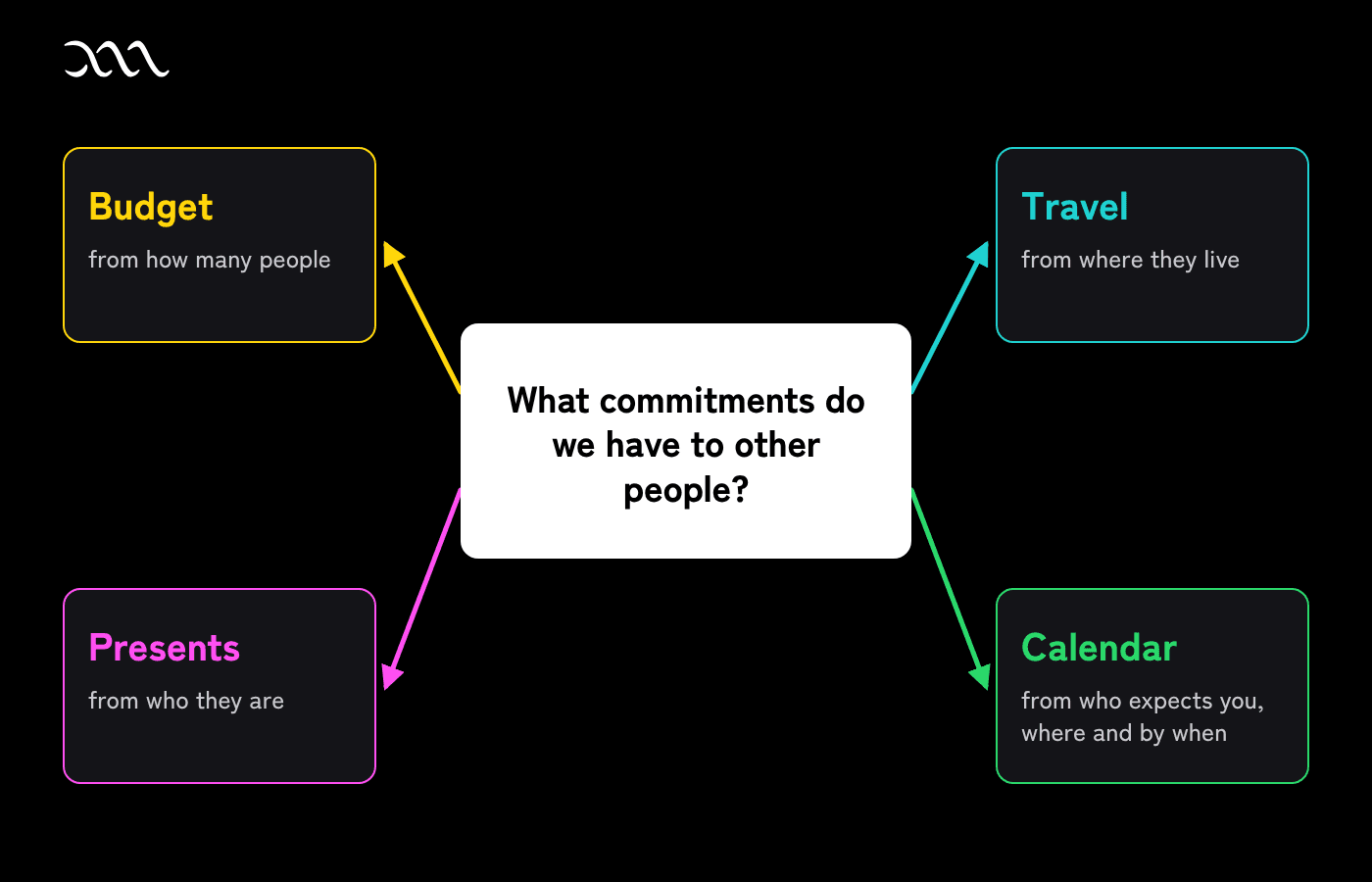
What commitments do we have to other people?
Watch what falls out of it.
- The budget came from how many people we'd be seeing.
- The travel came from where each of them lives.
- The presents came from who they are.
- The calendar came from who was expecting us, where, and by when.
One question, four answers. No grid.
Christmas was never a project. It's a set of promises.
Making, promises, self
So here's what I think now. It's my view, from one failed evening, and I'm still testing it.
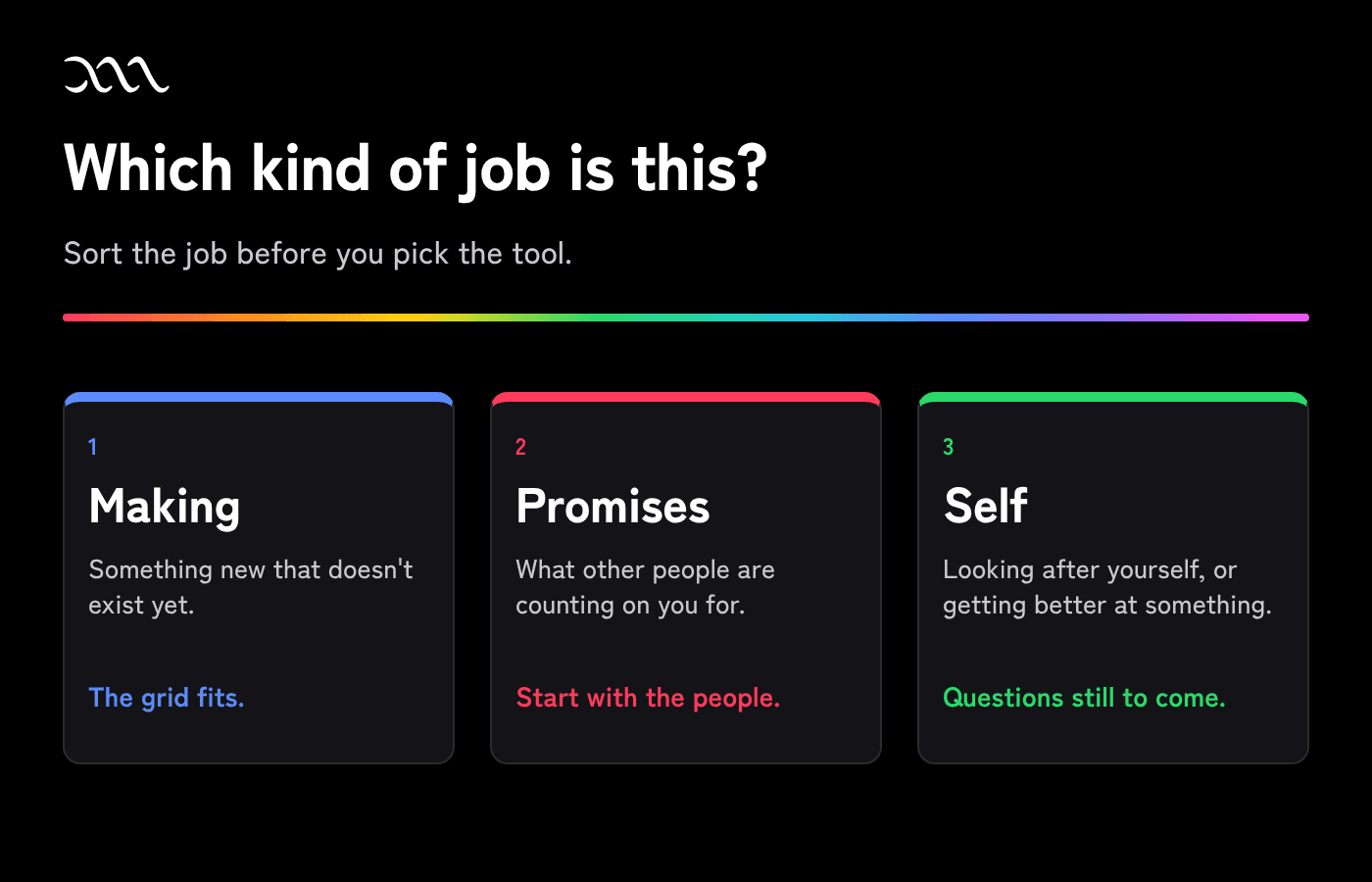
There are three kinds of job.
- Making. Something new that doesn't exist yet: a class, a shop, a website. A goal in the middle with steps around it suits this well. The grid fits.
- Promises. Things other people are counting on you for: Christmas, a shared calendar, a family week. These start with people, not with a goal.
- Self. Looking after yourself, or getting better at something. That needs a different set of questions again, and I haven't worked those out yet.
Unless you're working on yourself, a great deal of organising your life is really managing what other people expect of you. And, where you can, doing a little better than they expect.
For a brain like mine, that's the hard half. Making is exciting. Promises need consistency, and people are relying on you.
So the game is changing. Before it builds anything, it will ask which kind of job this is. A making job gets the grid. A promises job gets a short run of questions about people. That sorting question is being added now; it isn't in the app yet.
Count up big. Count down small.
One more thing came out of that week, and it's about time, not Christmas.
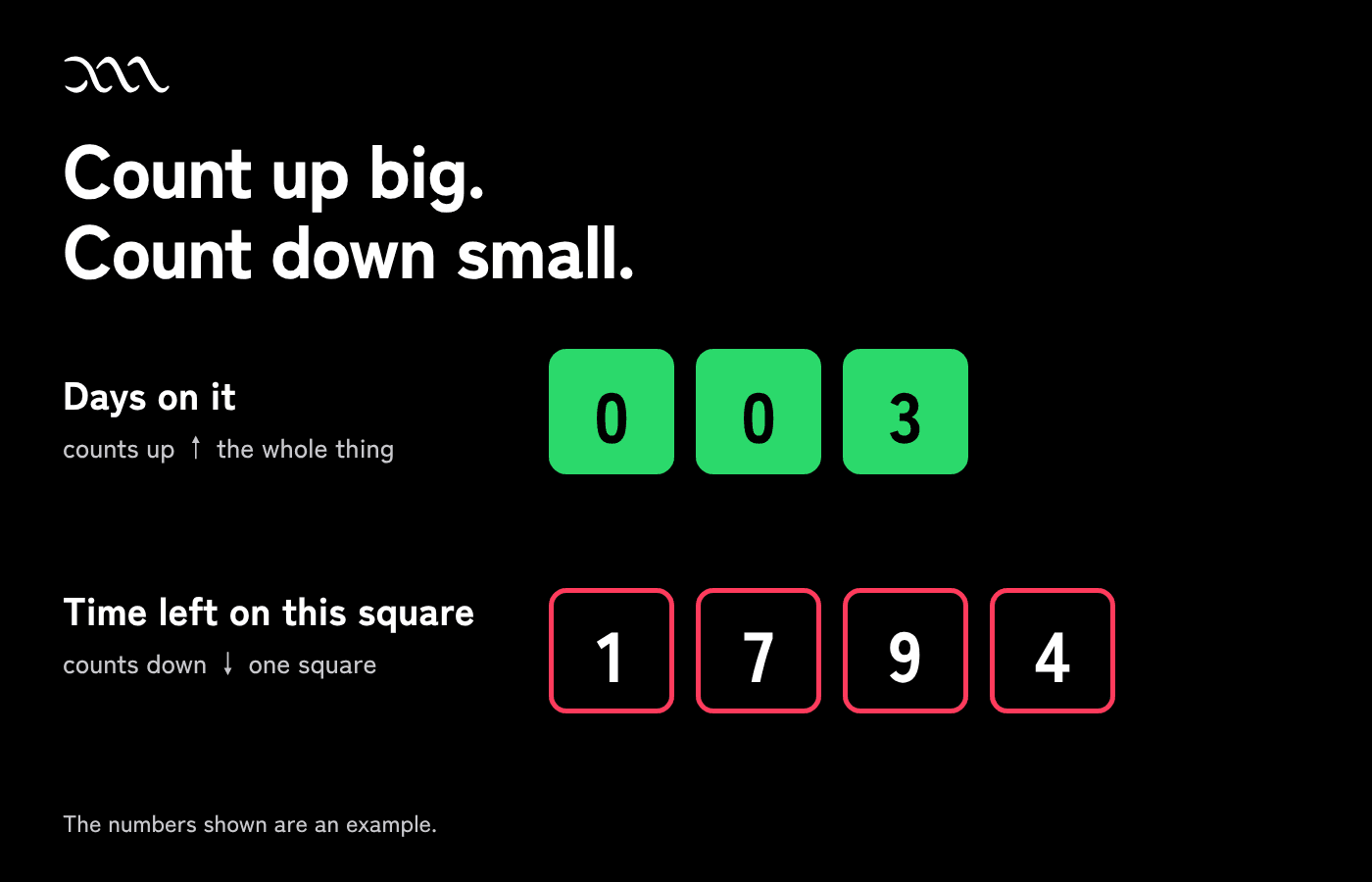
On my own grid I keep two counters. One counts up: the days I've been on the whole thing. One counts down: the time left on the single square in front of me.
Most plans do it the other way round. They count down to one big deadline, which frightens you, and they let each small task take as long as it likes, which is how an afternoon disappears.
Count up big, and the big number is only ever a record of showing up. Count down small, and the pressure sits on one square, where you can do something about it.
Your promises page (try this tonight)
One sheet of paper. Ten minutes.
Pick the thing other people are counting on you for. Christmas will do. So will a school term, a house move or a busy month.
- Write the names. Everyone who is expecting something from you.
- Next to each name, write what they're expecting. A visit, a present, a lift, a phone call.
- Add where, and by when.
- Now read down the page. Count the people: that's your budget. Look at where: that's your travel. Look at by when: that's your calendar.
- Circle the one that's soonest, and do it. Then say "Job done" out loud. You know the drill.
You haven't planned Christmas. You've found out what you already promised. That's most of the work.
"So your game failed. Why should I trust it?"
Fair. It did fail, in its first week, at the first thing I asked of it outside work.
Here's my honest answer. A tool that works on everything is usually a tool nobody has tested properly. I'd rather know early what the grid is good for, which is making things, and what it's bad at.
One evening is one test, not proof. I'll keep reporting what I find, including the next time it goes wrong.
Back to that evening
I threw Christmas at the fan and nothing blew back. No pound notes. No stack of jobs marked done. Only a grid nobody wanted, and a bad mood that was entirely mine.
The fan wasn't the problem. I'd thrown the wrong thing at it.
What changed is the order. People first, when it's a promise. Goal first, when you're making something. And one question before either, so the game knows which it is.
Which leaves the question I'm working on now.
What should the first ten minutes of any plan ask you?
That's the next chapter: The Interview That Builds Your Grid.
Your turn. Tell me in the comments: what's one thing people are counting on you for this month? One word is enough.
If you want the interview, subscribe. It's free, and chapter 3 comes straight to your inbox.
And if you know someone who plans beautifully and still ends up apologising, send them this.