Written by a human through reciprocal interview and discovery with AI, and vice versa through symbiosis.
Finish Anything Now
Perhaps My Monkey Brain Is a Genius
A preface. A man with a thousand unfinished ideas finds out what "finished" really means, and why it is the first step into a new RenAIssance.
Have you ever had an idea so good that you raced home to write it down before it vanished?
And then looked at it ten minutes later and thought: what was I even thinking? It's too big. I've got work to do. I have to leave in fifteen minutes.
That happened to me every day for most of my life. This preface is about what I finally did with it. There's one sentence near the end that changed everything for me, and it isn't the one you'll expect.
Too many ideas for one life
I'm an architect. I've run my own practice for 20 years. My parents are entrepreneurs and so are my brothers. You'd think I'd have worked out business by now.
I hadn't. I'd worked out working.
For seven years I worked for a client who seemed to have no limit on ideas. Money was weighed at every turn, but imagination wasn't rationed.
I'd wake up with an idea, take it to him, and he'd sit with it. A few weeks later we'd be exploring it. Roofs that open on hydraulics. An underground range and a garage for fourteen classic cars, dug beneath a listed house. A glass orchid house he named an orchidarium. Secret passages. Staircases that move. A room built around one of the most famous beds in English history.
At times I was leading a design team of twelve. For a man with my brain, it was perfect.
The project has been running for 20 years. It still isn't finished, and it may not be for another 20. Ideas were never the shortage. Finishing was.
And they weren't my ideas. My own kept coming.
Then the ideas took over.
The crash
I'll say it plainly, because the things I feel I shouldn't say are exactly the things I should.
I had a manic psychotic episode. I threw everything up in the air to try to build a new life, and I nearly burnt every bridge I had.
In the middle of it, in May 2023, I bought a church at auction: St Paul's Jubilee Memorial Church in Penzance, a building once owned by the King, about as far west as England goes. The auction fell on my mother's birthday. I took it as a sign.
My family asked why on earth I'd buy an old church 400 miles from home. That's mad.
The national papers called me an eccentric artist. I told the reporter it had been "a ride of relentless passion and a dash of madness". I wasn't wrong.
Was it naive? Yes. Was it against everybody's better judgement? Also yes.
Or did they just not see what I saw?
A life of extremes
That's how my life has gone. Riches to rags, and back, sometimes in the same month.
One week I was sweeping 25 years of pigeon droppings out of that church. The next I was designing an underground range beneath a mansion. The week after, I was staying at an archduke's old hunting lodge in the Alps.
And there have been weeks when a client didn't pay and I needed a food bank.
The church is still standing, and so am I. I call it the Penzance RenAIssance now. That was the start of the road I believe leads to financial freedom.
The fog and the shiny things
What I didn't know until this year, at 46, was that I have ADHD (attention deficit hyperactivity disorder). Doctors have only just diagnosed it.
I'm not stupid. I spent ten years qualifying as an architect. But the part of the brain that plans, starts and finishes, what doctors call executive function, has never worked the way other people's seems to. It's made relationships hard all my life. I'd spent decades feeling guilty about something without knowing it had a name.
I lost everything. I broke everything. I couldn't find anything. I lived in chaos and couldn't plan for next week, never mind the future. I didn't have the foresight, or frankly the dignity, to not look chaotic. I thought that was just me.
But I also thought there had to be a way out.
So I tried to train myself to believe I could do something bigger. I tried journaling, and I couldn't keep it up. So I tried writing the same line every morning instead:
3 million in 7 years. 3 million in 7 years. 3 million in 7 years.
That was August 2022. I've got pages and pages of it. I still have nothing to show for it.
But I feel like I'm standing at the foot of a new mountain, and this time I can see the path.
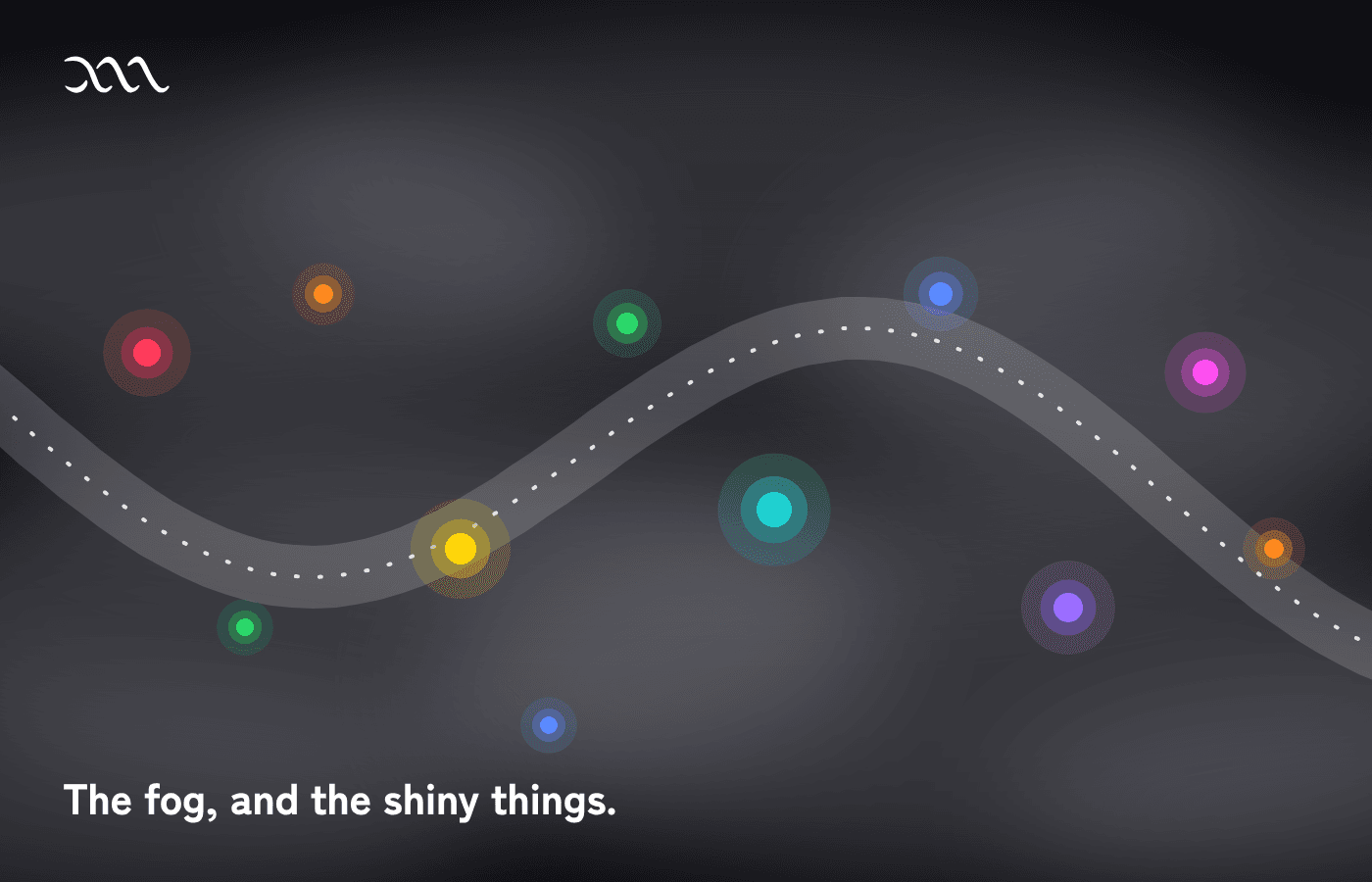
The best way I can describe my mind is fog.
I've walked through fog all my life, and I'll be honest, I love it. It's exciting, because you never know what's coming next. Then something shiny appears out of the mist. Oh my god, it's the most exciting thing in the world. I play with it for a while.
Then the fog comes down again and I keep walking until I find the next one.
One day I was cycling along and I actually said to my own brain: stop it. Stop with the ideas. It's too much.
And then a second thought arrived, quieter:
Perhaps my monkey brain is a genius.
Firefighting
Here was the real problem. I'd been firefighting my whole life.
I dealt with whatever was directly in front of me. I couldn't see the wood for the trees. I couldn't put things in boxes and keep them there. It all blurred into fog.
Then AI arrived, and suddenly there was more shiny. A lot more.
The engine
I'll be honest about this part too. For a while I went through something like an AI psychosis. I genuinely believed I could do anything now.
And in a way, I could.
- I could write a book.
- I could think of an image and see it a moment later.
- I could produce a planning application in half the time it used to take.
- I could become the surveyor, turning photographs into CAD (computer-aided design) plans.
- I could talk an idea through and get a 3D model back.
- I could set up my own accounts by learning to ask the right questions.
But it all depended on me asking the right questions. That was exhausting.
At one point I had six or seven sessions open across three different AIs. I'd ask one AI to interview another, just to get past the made-up answers to the real ones.
So I started teaching the AI how to work with me.
I taught it to stay brutally honest and not tell me what I wanted to hear. I taught it who I am, so it pitched answers at my level. When something got complicated, I taught it to explain it the way you'd explain it to a twelve-year-old, with a story or a picture.
Then I realised what I actually needed. I needed a relationship, not a tool. Something that knew me, knew the goal, and didn't wait for me to ask everything.
So I built one.
- Every idea that fell out of my head got caught, put in order, linked to every related idea, and stored where I could find it again.
- Those ideas got turned into possible businesses: how each might make money, and which one mattered most.
- My calendar started moving itself around. If I spent too long on one thing, the next morning it nudged me. Still haven't done this? Don't forget.
- My twelve email inboxes got cleaned so I only saw what needed me. Replies were drafted for me, already knowing which project each email was about and where it was up to.
I'd built myself an assistant that set my priorities.
And I was still firefighting.
The frogs
I was still picking the shiniest thing first, even with ten things waiting in the background.
I call those background things frogs, as in eat the frog: do the thing you're dreading first. It's painful knowing they're there. People are relying on me. I live in constant fear that I'm letting someone down, because I can't remember from one moment to the next what I'm meant to be doing.
My dad used to say: how do you eat an elephant? One slice at a time.
About two years ago I started building a learning system to teach people exactly that, one slice at a time. Another project, unfinished.
I went deeper. I built systems that built systems that built systems.
And one day I asked myself the question I'd never once asked.
What does finished look like?
What finished looks like
The answer was already written on those pages. 3 million in 7 years. It had never gone away.
I haven't always believed I could do it. But it never left.
So, baby steps. How?
I couldn't get there by trading my time for money. I'd already spent years doing that with nothing to show for this goal, and every month that passes adds pressure.
I needed something that makes money while I sleep. Something people want to buy without me in the room.
So I asked a simple question: what problem do I have?
That one was easy.
I can't finish anything.
A thousand ideas, and nothing finished. I counted this morning: one folder of my idea vault holds 80 notes, about 65 of them separate ideas, and there are more in the other folders.
The four levels
My dad has always said there are two ways to make money. Man makes money, or money makes money.
I've been reading the people who think hardest about that: Napoleon Hill's Think and Grow Rich, Robert Kiyosaki's Rich Dad Poor Dad, Naval Ravikant, Alex Hormozi and more.
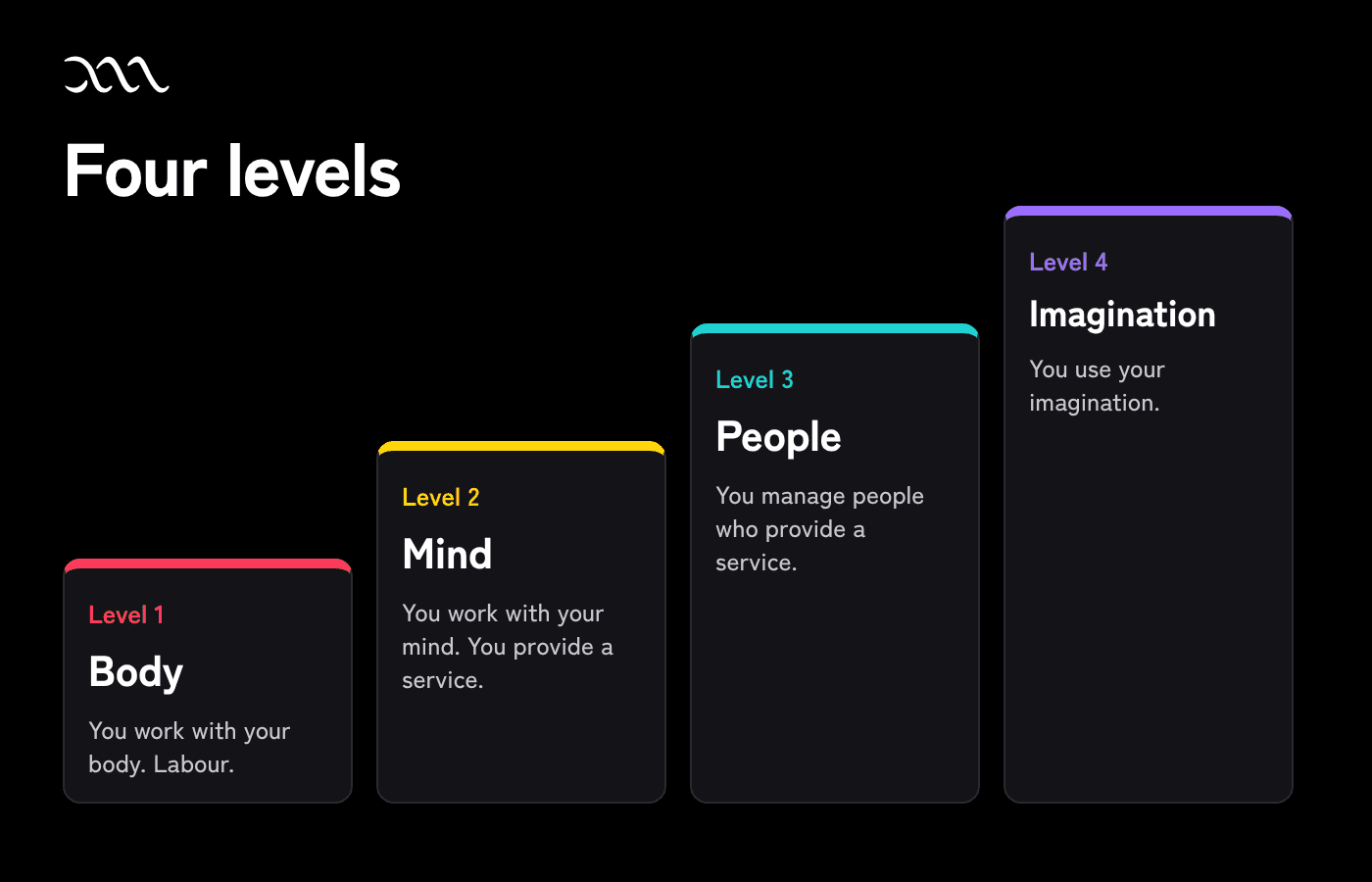
And I've come to see four levels:
- You work with your body. Labour.
- You work with your mind. You provide a service.
- You manage people who provide a service.
- You use your imagination.
For 20 years I'd been at level two. That isn't a business. That's a job. I'd been a slave to my own hours, converting time into money.
The imagination level is the one I need. And the problem my imagination needed to solve was my own.
I need to finish something. I need to finish anything, now.
Do anything now
In February 2023, three months after I first used ChatGPT, I set up a limited company called DoAnythingNow.
From day one I was fascinated by the same thing. Not what AI could do, but how to be with it. How to set the moral standards. How to bond, talk, give and take, and build a real working relationship with it.
In my heart I've always known the best thing we can do is hold on to what makes us human. Lean into it. Understand it.
So what makes us unique?
ikigAI
You may know ikigai: the Japanese idea of the thing you love, that you're good at, that the world needs and that someone will pay for.
Look at how it ends. A. I.
Everyone has their own thing. Their own trade, their own skill, the thing they love. Usually it makes money when it's good for people and solves a problem for someone else.
Now anyone can build a website, write code and set up a business. If you want to know how to do your accounts, you ask. The information is free. It's open to everyone.
What isn't free, and isn't easy, is turning that knowledge into money.
Knowledge is free. Implementation is what's scarce.
Imagine
Imagine a world where all you had to do was understand yourself.
You'd work at your highest passion for as long as you could, with no expectation of the outcome. You wouldn't have to worry about making money, because the business side was already taken care of.
Imagine you had a website built for you, on your own domain, under your own company. A blog on it writes itself.
You don't write it, you just talk. Something asks you questions about who you are, what you've noticed today, what drives you. Each answer adds to your unique perspective. When there's enough, it becomes a post, linked to what's changing in your industry that week, with pictures.
That's your journal. Except now it's public, and it's useful.
Because your unique view of life, shared openly, helps other people. It helps them see the world differently and get from lack to abundance.
It lets them see themselves as the hero of the story.
All we have to do is show them who the villain is, and walk them through the journey.
The missing piece
Here's the catch.
We can show people what they're doing wrong. We can give them all the information in the world. But it's worth nothing until they use it. It only becomes valuable when they turn it into something that:
- earns money,
- matches what they love,
- helps somebody,
- and gets better every time they do it.
That's ikigAI.
And if everyone can now do anything, and see the world differently, isn't that a Renaissance?
Look at that word too. RenAIssance. The A and the I are already there.
Back in March 2024, standing in a derelict church, I told a reporter my vision "could herald a Penzance renaissance". I hadn't noticed the A and the I yet.
Finish anything now
This is what I'm building now.
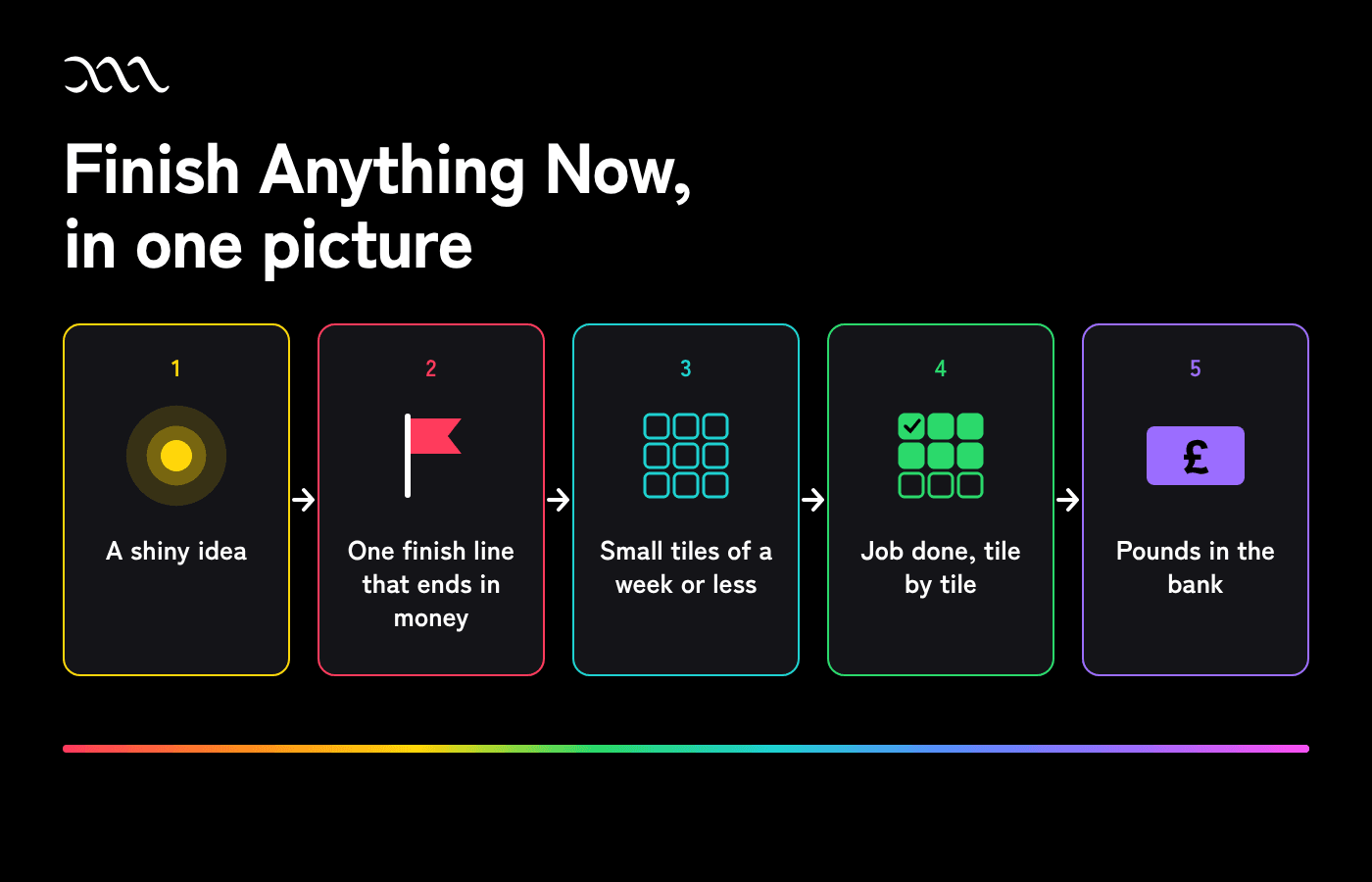
A partner, not a tool. Something that understands who you are. It asks what your one main task is. It reshapes that task so it ends in money. Then it walks with you, step by step, until it's done.
And done has one definition only.
It's finished when the money lands in your bank.
That's it. That's the task.
Not every job earns money directly. A planning drawing doesn't. A tender pack doesn't. But each one ends in something you can invoice, and the invoice ends in the bank. So every step points at the money, even when it's several steps away.
Nobody can promise you the money. What we can do is make sure every step is walking towards it.
When everything hits the fan, let it hit our fan. Our fan blows it back as pound notes, by finishing it.
That's the last piece of the ikigAI puzzle. It's also the first step of the journey to financial freedom, and the first step into this new RenAIssance and an age of abundance.
Maybe we call it the New AIGE.
Back to the fog
I started by telling you about racing home to catch an idea before it vanished.
I still do that. The fog is still there and the shiny things still appear. I wouldn't swap my monkey brain for anything.
The difference now is that every shiny thing has somewhere to go, and every one has a finish line.
Back in 2023 I designed and made a pencil case with the DoAnythingNow mark on it and six words: Find your path and be legendary. I see it every day. It reminds me where I'm going, and who I want to be when I get there.
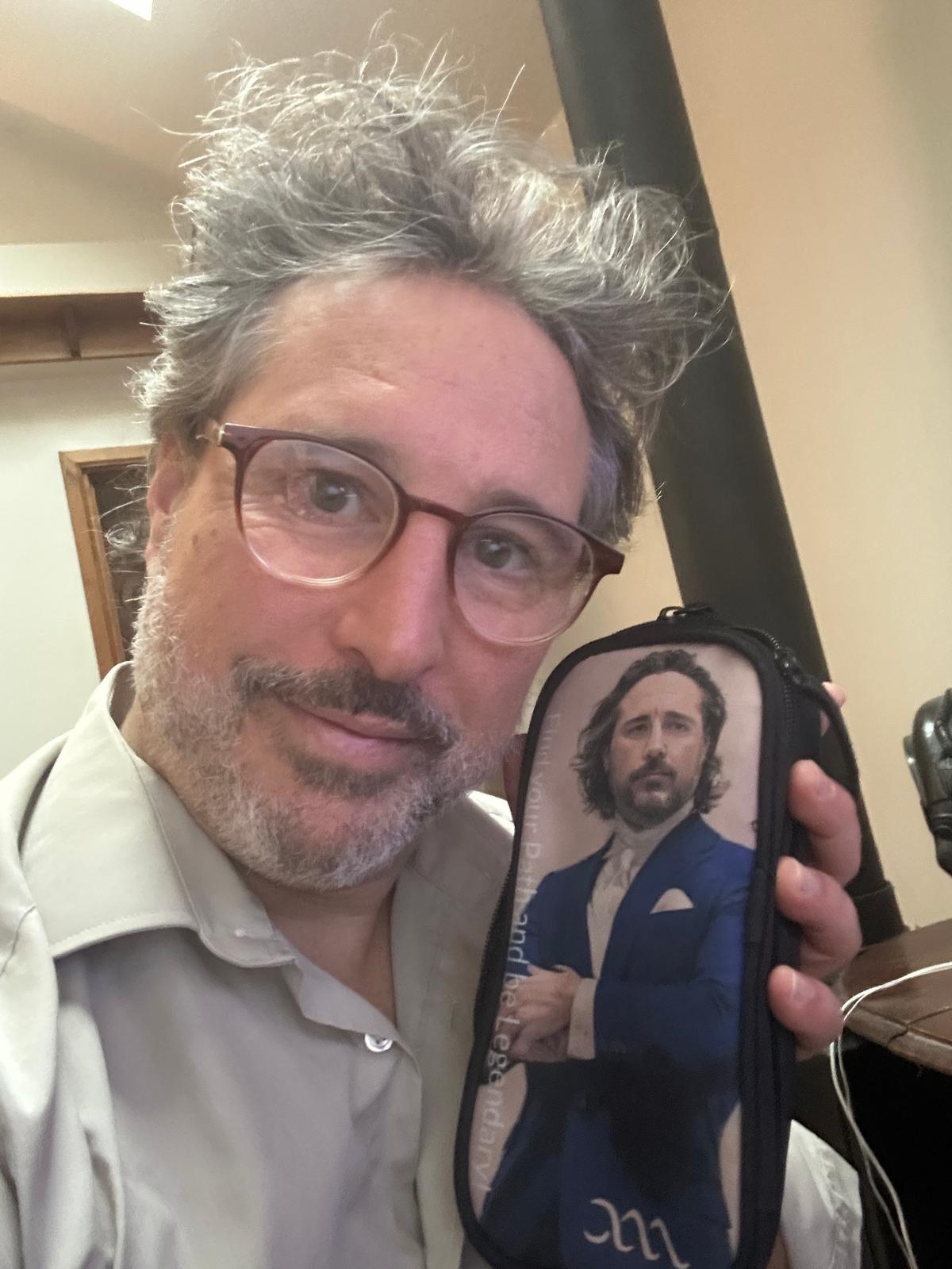
3 million in 7 years. I'm finally at the start.
Do anything now: finish anything now.
So if life is a game you can finish, how do you play it?
That's the first chapter. Stop Planning Your Life. Play It.
One word in the comments: what's the one idea you've never finished?
Know someone with a head full of brilliant, half-built ideas? Send this to them.